
Think about brands you like — Apple, Nike, or Coca-Cola. They all do one thing very well: marketing. But marketing is not just ads or posts on social media. It is much bigger than that. In this guide, you will learn the basics of marketing in easy words.
What Is Marketing?
Marketing means finding out what people need. Then you show them how your product can help them. It is not only about selling. First, you must do research. You need to know your customer. You need to know your product. You need to know where your customer spends time online or offline.
A good marketer does not start with ads. First, they study people. Then they make a plan. Then they take action.
One key point: every marketing method stops working well after some time. This is called diminishing returns.So you must always try new ideas and keep making them better.
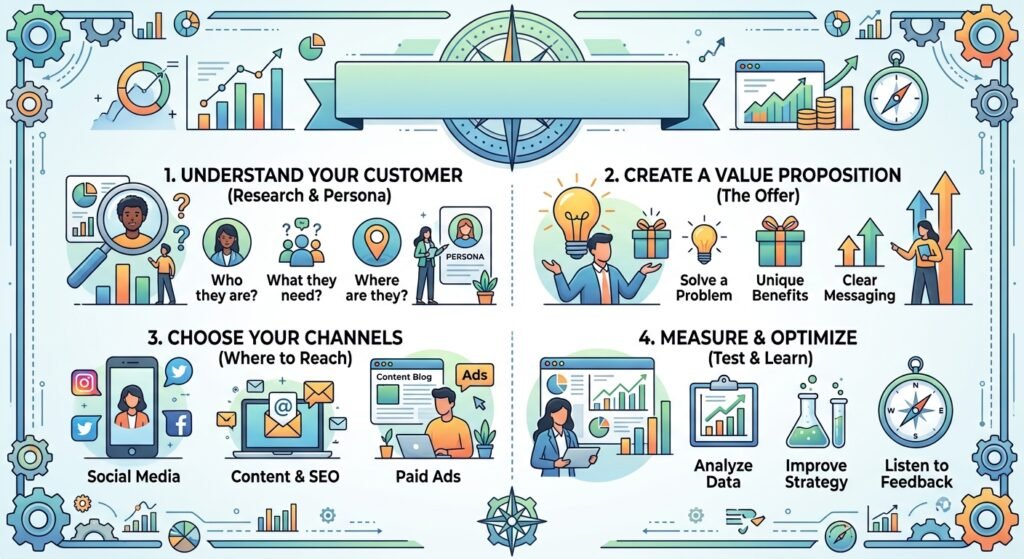
4 Basic Steps of Marketing
Every good marketing plan has these four steps:
- Research – Learn about your market and your customers.
- Strategy – Decide your message and how you want people to see your brand.
- Execution – Run your marketing on the right platforms.
- Measurement – Check what worked. Then improve it.
Most beginners skip research. They go straight to ads. This is a big mistake.
The 7 Ps of Marketing
Marketers used to talk about only 4 Ps. Now there are 7. These are simple ideas that help you build a full plan:
- Product – What are you selling? What problem does it fix?
- Price – Is your price fair?
- Place – Where can people buy it? Online or in a store?
- Promotion – How will people learn about it? (ads, social media, email)
- People – Everyone who helps give the product or service to the customer.
- Process – The steps you follow to give a good experience every time.
- Physical Evidence – Proof that shows quality, like reviews or a good website.
These 7 Ps help move a person from “I don’t know this brand” to “I want to buy this.”
Know Your Audience
You cannot market to everyone. You need to know exactly who your customer is. This is called market segmentation. It means breaking a big group of people into smaller groups. You can group them by age, interest, income, or behavior.
After that, you can make a buyer persona. This is a simple picture of your ideal customer.
Example:
A software company selling to big businesses talks about saving time and money. A shoe brand selling to everyday people talks about lifestyle and feelings. Both know their customer well. But they market in different ways.
The Customer’s Journey
People do not buy something the first time they see it. They usually go through three steps:
- Awareness – They learn about your brand (blog, ad, social post).
- Consideration – They compare you with others (reviews, case studies).
- Decision – They choose to buy (through trust, discount, or demo).
This path is called the marketing funnel. Many businesses only focus on “buy now” content. They forget to build trust first. That is a mistake.
Branding and Value
Your value proposition is one simple line. It answers this question: “Why should someone choose you and not another brand?”
Branding is more than a logo. It is the feeling people get when they think about your business. Good branding builds trust. Trust makes people buy faster.
Digital Marketing Basics
Today, most marketing happens online. Here are the basics:
- Understand your audience using analytics tools.
- Make helpful content (blogs, videos, posts) that answers real questions.
- Track your results, so you know what is working.
Channels like SEO, email, social media, and paid ads all help at different steps of the funnel. But they all follow the same basic rules.
A Simple Marketing Plan You Can Follow
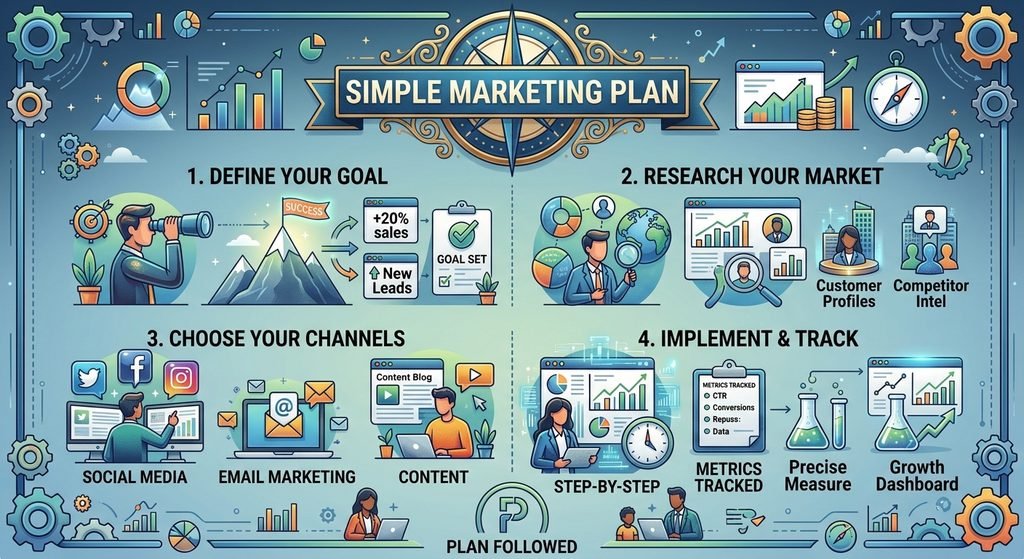
- Know your audience and their problem.
- Write a clear value proposition.
- Pick 2–3 platforms where your audience spends time.
- Make content for each step (awareness, consideration, decision).
- Set simple goals and track them.
- Test, learn, and keep improving.
Final Thoughts
Marketing tools change every year. But the basics stay the same: know your audience, give real value, and keep improving. Once you understand these simple basics, everything else — SEO, ads, social media — becomes much easier.